






The Self That Survives: Sufi Philosophy of Self
A Sufi inquiry into who you are after the fire
There is a question that transformation always eventually forces. Not the dramatic question — will I survive this? — but the quieter one that arrives afterward: who, exactly, survived?
The person who stepped into the fire and the person who stepped out of it are not the same. Something was lost. Something was found. And in the space between what was released and what remains, there is a question philosophy has been circling for centuries. In Sufi thought, however, it is not a question to be resolved. It is a question to be lived.
The Many Selves
Sufi philosophy begins with the assumption that the self is not fixed and knowable, but layered and unstable. The Arabic word for self — nafs — does not translate simply as "soul" or "ego." It encompasses both, and more: the entirety of the inner life, with all its hungers, its capacity for both obstruction and illumination.
In Sufi teaching, the primary enemy is not found outside the self but within it. The nafs is the first and most persistent obstacle on the path toward the divine. Not because the self is evil, but because the self, left uncultivated, mistakes itself for the whole story. It clings to its own version of reality. It confuses its preferences for truth, its fears for wisdom, its habits for identity.
The work of the Sufi path is the gradual refinement of the nafs — not its destruction, but its transformation. Like ore that must be passed through fire before the gold inside it can be seen.
Dying Before You Die
There is a teaching at the heart of Sufi practice that stops most people the first time they encounter it:
"Die before you die."
It is among the most radical instructions ever given to a human being. Not a metaphor for acceptance, not a preparation for physical death, but a precise description of what it means to become, while still alive, the self that has released its grip on everything untrue.
Fana — the annihilation of the self — means, in Rumi's words, "to die before one dies." It is the dissolution of the ego before the Divine, so that the self becomes an instrument rather than an obstacle.
And crucially, it is not the end of the story. Fana is followed by baqa: subsistence in the Divine. After annihilation, the mystic returns to the world, but now lives fully in and through the Divine presence. The self that returns is not the self that disappeared. It is something quieter, truer, and paradoxically more alive.
Rumi described this process not as a single event but as a continuum — a series of deaths and rebirths that constitute the entire arc of conscious existence:
"I died as a mineral and became a plant. I died as a plant and rose to an animal. I died as an animal, and I was human. Why should I fear? When was I less by dying?"
Each death is not a diminishment but an expansion. Each self that falls away reveals a larger one beneath it. The question is not what you lose in transformation. It is what you were always, beneath everything you mistook for yourself.

The Nafs and Its Stages
Sufi masters were precise about the nature of the self's evolution. They did not speak of transformation in vague terms but mapped it with the care of physicians. The nafs moves through stages, through sustained inner work, through the crossing of each valley.
The first stage is the nafs al-ammara — the commanding self, driven entirely by impulse and desire, unaware of anything beyond its own hungers.
The second is the nafs al-lawwama — the self-reproaching self, aware enough to recognise its own patterns and beginning to resist them.
The third, and the goal of the entire path, is the nafs al-mutma'inna — the tranquil self, one that has found its rest not in external circumstance but in something far deeper and more stable.
The tranquil self is not a self that has solved every problem or answered every question. It is a self that has learned to hold uncertainty with grace and that has become, through the long work of the path, spacious enough to contain what it cannot resolve.
Ibn Arabi and the Mirror of the Self
It was Ibn Arabi — the 12th-century Andalusian mystic known as Shaykh al-Akbar, the Greatest Master — who took the philosophy of the self to its most radical conclusion. The self, in his view, is not separate from the divine — it is a particular expression of it. A face of the infinite, made finite, moving through the world in search of its own origin.
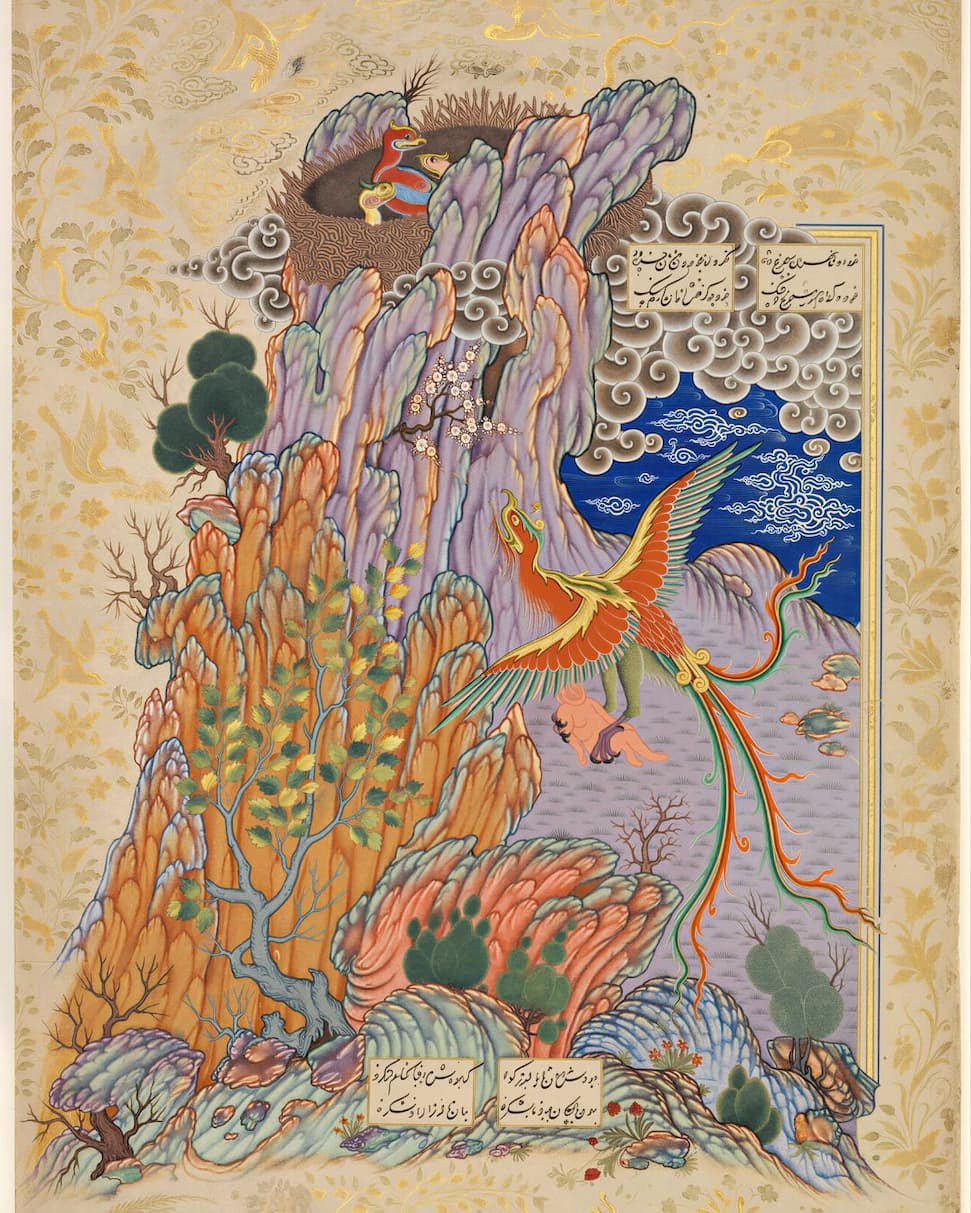
This is the idea that the Simurgh embodies so perfectly. The mirror that shows the thirty birds themselves is not a cruel trick or a disappointment. It is the most precise description of reality that the myth could offer. You are what you were looking for. The self you will become through transformation is not a foreign self but an essential self — the self that was always present beneath everything that was never truly yours.
The question, then, is not who you become after the fire. It is who you discover yourself to have always been, once everything else has burned away.
What Remains
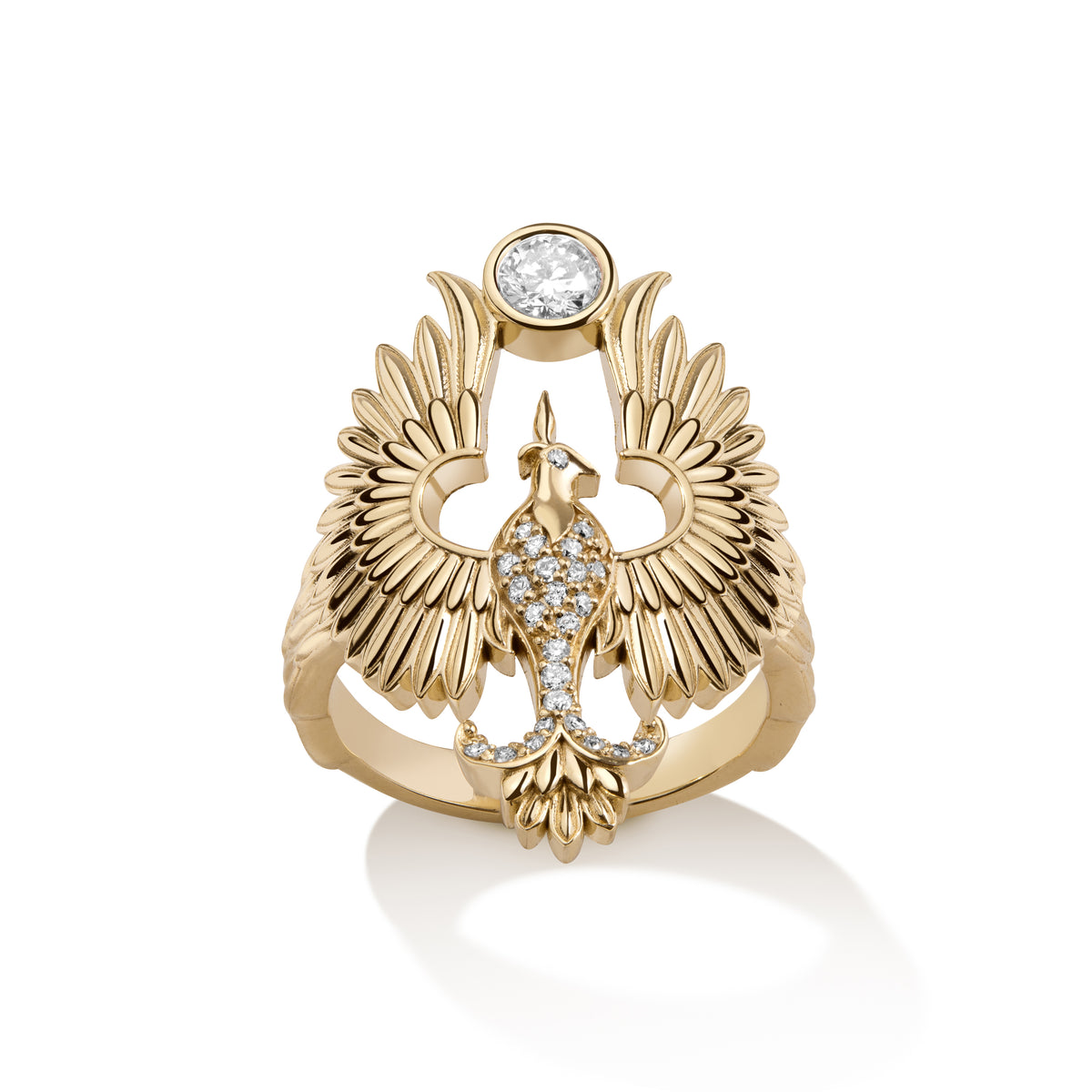
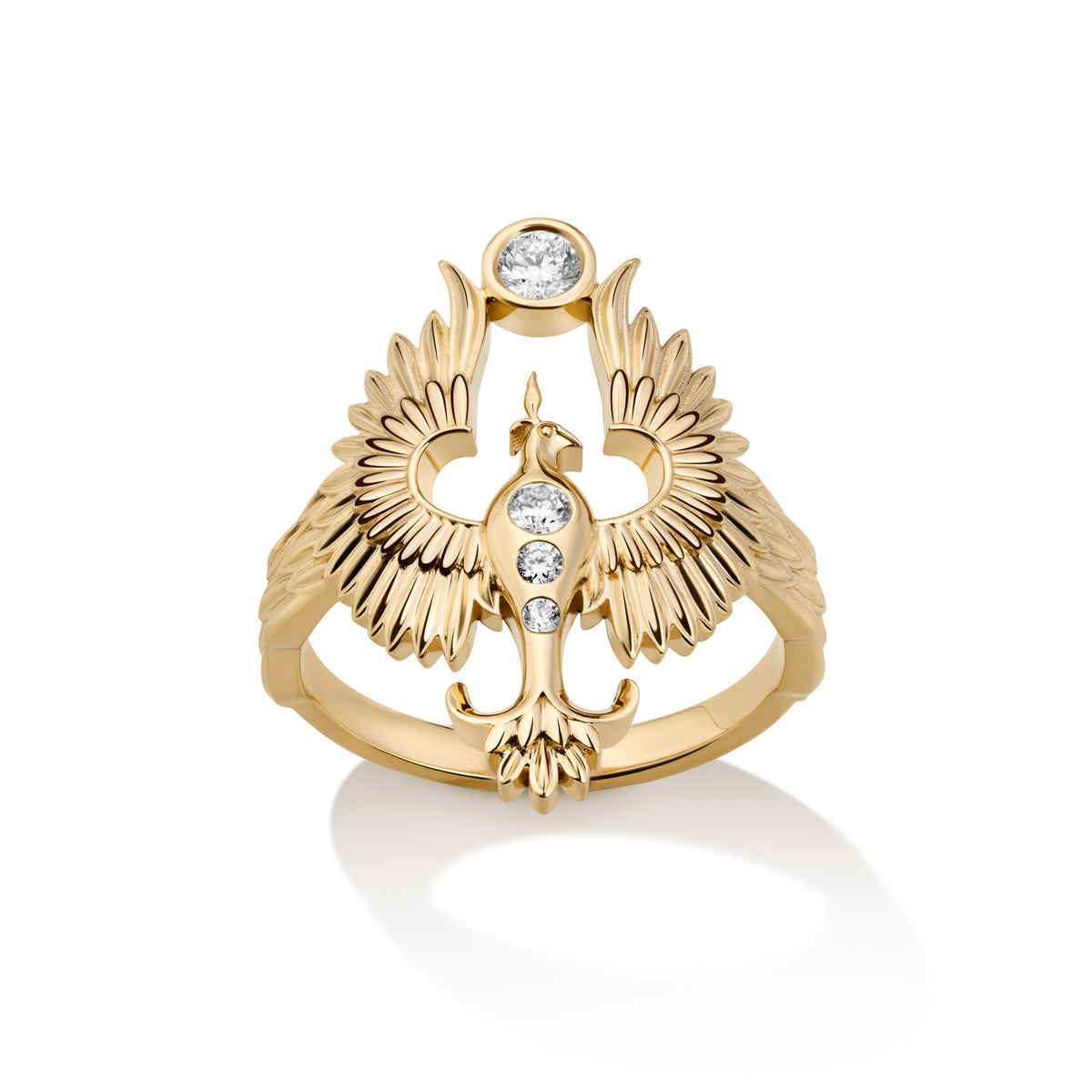
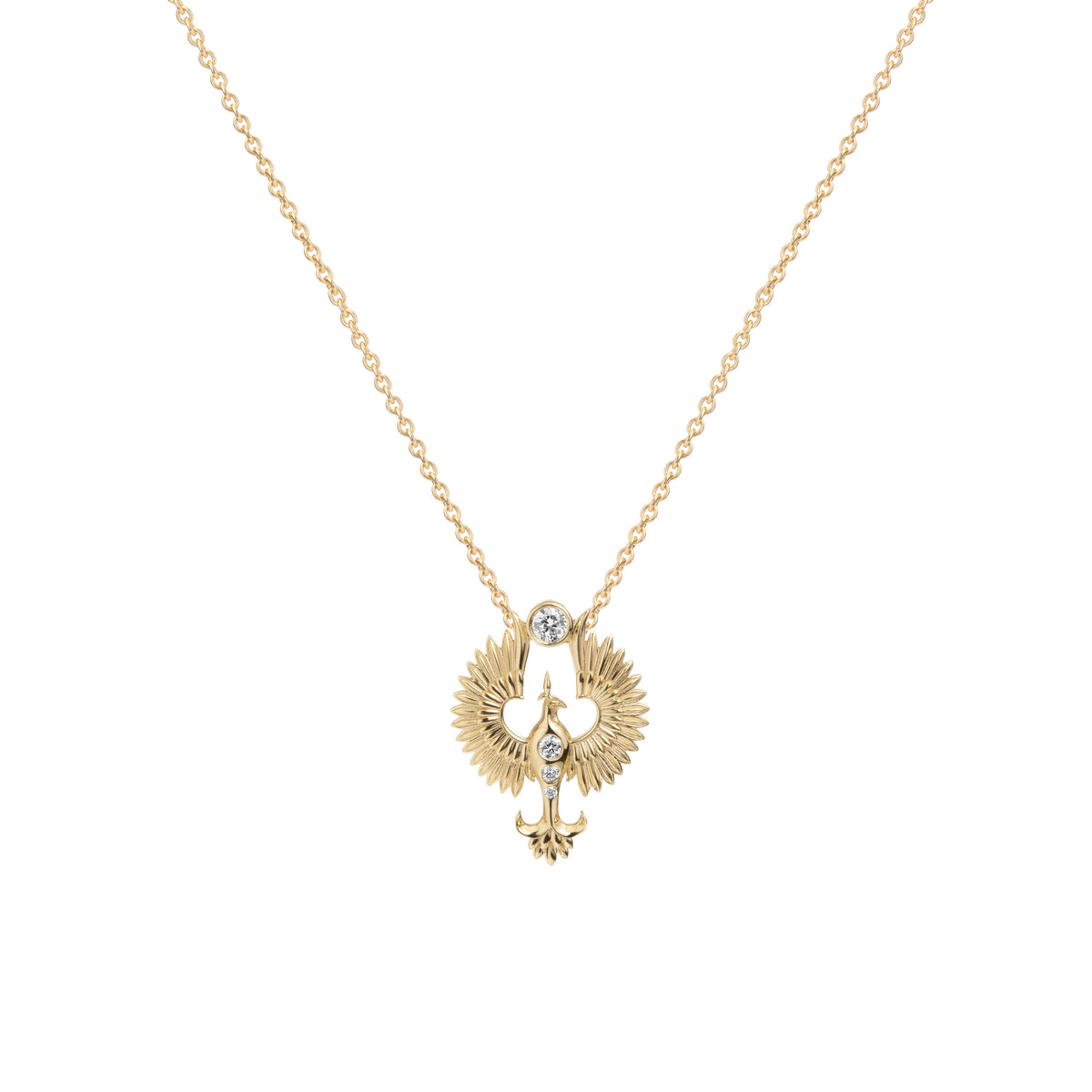
Every tradition that has ever grappled with transformation arrives eventually at this same paradox: the more the self releases, the more fully itself it becomes. The birds who complete the seven valleys do not arrive as lesser beings, diminished by what they surrendered. They arrive as the Simurgh — whole, finally themselves. The Phoenix that rises from the ashes is not a lesser Phoenix. It is the truest version of what the Phoenix always was, freed from everything it had carried.

This is what the Sufi path has always been pointing toward. Not the erasure of the self, but its return to what it always was — before the conditioning, the fear, the habit, the mistaken identity. The question "Who am I after transformation?" contains its own answer. You are what was always there, waiting to be uncovered. The journey does not create a new self. It reveals the one who was always present.
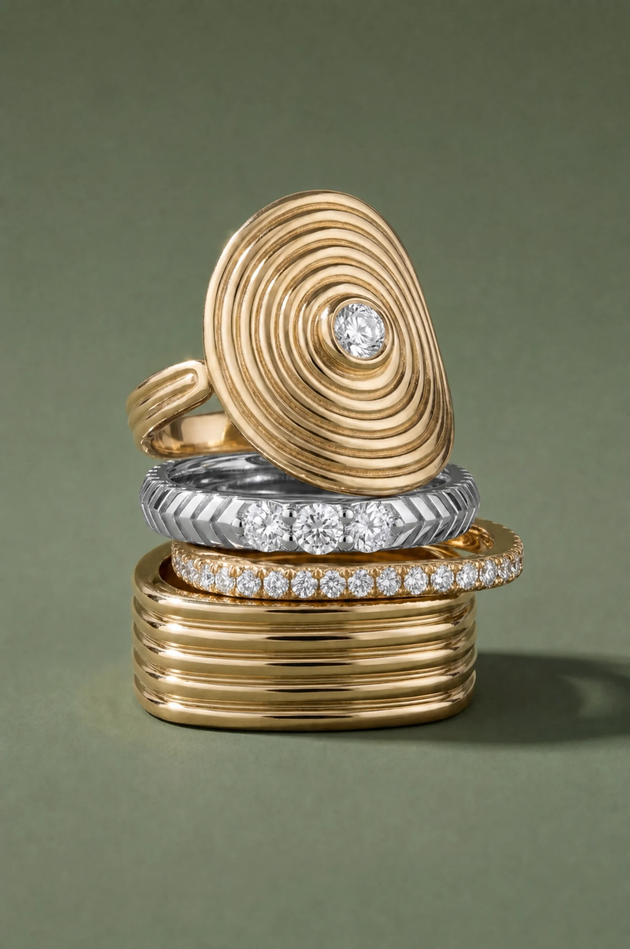
Shop Anka Rising Collection.
ANKA RISING
Diamond


One-of-a-Kind

Pink Tourmaline